In power electronics design and procurement, the DC filter capacitor is one of the most specification-sensitive passive components in any circuit. It stabilizes DC bus voltage, suppresses ripple from rectification or switching, and protects downstream components from voltage transients. For B2B buyers, design engineers, and wholesale distributors, selecting the correct capacitor type and specification requires a structured evaluation across electrical, thermal, and reliability dimensions. This article provides that framework at an engineering level.
A DC filter capacitor is a capacitor placed across a DC power rail to reduce voltage fluctuations caused by load transients, rectifier switching, or converter switching noise. It stores charge during voltage peaks and releases it during troughs, smoothing the output waveform toward a stable DC level. Without adequate filtering, ripple voltage propagates through the circuit and causes operational instability, electromagnetic interference (EMI), and premature component degradation.
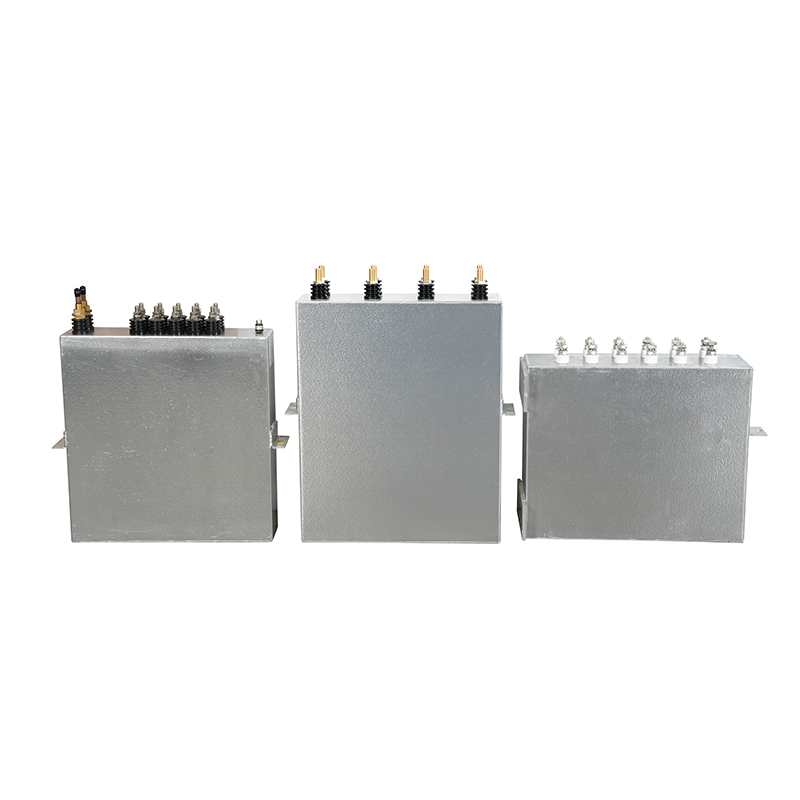
DC filtering capacitors serve three overlapping functions in practical circuit designs:
The choice between electrolytic and film capacitors for DC filtering is determined by the frequency range of the ripple, the required capacitance value, the operating voltage, and the thermal environment. These two technology families differ significantly across every relevant parameter. The table below provides a direct comparison of procurement and design decision-making.
| Parameter | Aluminum Electrolytic | Metallized Polypropylene Film | Metallized Polyester (PET) Film |
|---|---|---|---|
| Capacitance range | 1 uF to 100,000 uF | 0.01 uF to 1,000 uF | 0.001 uF to 100 uF |
| Voltage range (DC) | 6.3 V to 600 V | 50 V to 2,000 V | 50 V to 630 V |
| Typical ESR | Medium to high (10–500 mohm) | Very low (1–10 mohm) | Low (5–50 mohm) |
| Ripple current handling | Moderate (ESR-limited) | High | Moderate |
| Frequency range | DC to 100 kHz | DC to several MHz | DC to 1 MHz |
| Service life (typical) | 2,000–10,000 hours at rated temp | 100,000+ hours | 50,000–100,000 hours |
| Self-healing capability | No | Yes (metallized film) | Yes (metallized film) |
| Relative cost per uF | Low | High | Medium |
| Primary application | Bulk DC bus filtering, hold-up | Inverters, motor drives, PFC | General-purpose filtering |
Metallized polypropylene film capacitors are increasingly specified in inverter and motor drive applications because their self-healing mechanism — where localized dielectric breakdown vaporizes the metallization around a defect rather than causing catastrophic failure — provides significantly higher field reliability than electrolytic alternatives at high switching frequencies.
Accurate capacitance sizing for a DC filter capacitor capacitance value selection guide application begins with defining the acceptable peak-to-peak ripple voltage on the DC rail. For most power supply designs, ripple voltage is held below 1–5% of the nominal DC bus voltage. The required capacitance value is then derived from the load current, the ripple frequency, and the allowable ripple voltage.
For a single-phase full-wave rectifier with capacitive filtering, the approximate capacitance requirement follows the relationship: C = I / (2 x f x Vripple), where I is the average load current in amperes, f is the supply frequency in hertz, and Vripple is the allowable peak-to-peak ripple in volts. At a 50 Hz supply frequency with a 10 A load and a 5 V allowable ripple on a 48 V DC bus, the required capacitance is approximately 20,000 uF.
Additional factors that influence capacitance selection in practice include:
Voltage rating is the most critical reliability parameter for any DC filter capacitor voltage rating and derating rules evaluation. Operating a capacitor at or near its rated voltage accelerates dielectric degradation and significantly reduces service life. Industry standard practice requires voltage derating — selecting a capacitor whose rated voltage exceeds the maximum circuit voltage by a defined margin.
The table below summarizes standard derating factors applied by reliability engineers in professional power electronics design across different capacitor technologies and application environments.
| Capacitor Type | Standard Derating Factor | Example: 400 V Circuit | Notes |
|---|---|---|---|
| Aluminum electrolytic | 80% of rated voltage max | Select a 500 V-rated unit minimum | Higher derating at elevated temperature |
| Metallized polypropylene film | 85–90% of rated voltage max | Select a 450 V-rated unit minimum | Self-healing reduces failure risk |
| Metallized polyester film | 80% of rated voltage max | Select a 500 V-rated unit minimum | More sensitive to voltage surges than PP |
| Ceramic (Class II, X7R) | 50% of rated voltage max | Select an 800 V-rated unit minimum | Capacitance drops sharply at high DC bias |
Temperature directly affects voltage derating requirements for electrolytic capacitors. Most manufacturers specify a voltage derating factor of approximately 1.5–2% per degree Celsius above 85 degrees Celsius. Operating an electrolytic capacitor at 105 degrees Celsius at full rated voltage reduces its expected service life to a fraction of the rated value.
The practical effectiveness of a DC filter capacitor for power supply ripple reduction depends as much on equivalent series resistance (ESR) as on capacitance value. ESR represents the resistive losses in the capacitor's internal structure — the oxide layer, electrolyte conductivity, lead resistance, and termination contact resistance. Ripple current flowing through ESR generates heat and produces a resistive voltage drop that adds directly to the ripple voltage seen at the output rail.
The relationship between ripple current and ESR heating is governed by P = Iripple squared x ESR, where P is the power dissipated as heat within the capacitor. This power raises the internal temperature of the capacitor core, which is the primary accelerator of electrolytic capacitor aging. A capacitor operating at its maximum rated ripple current will reach its thermal limit and age at its maximum rated rate.
For high-ripple-current applications, buyers should evaluate the following specifications alongside capacitance:
For buyers evaluating DC filter capacitor wholesale bulk pricing and MOQ, market pricing is strongly segmented by capacitor technology, voltage rating, and temperature class. Standard 85-degree Celsius aluminum electrolytic capacitors in commodity specifications carry the lowest cost per microfarad. Long-life 105-degree Celsius low-ESR series commands a 20–40% price premium butdeliversr significantly longer field service life in thermally demanding environments. Metallized film capacitors carry higher unit costs but lower total cost of ownership in high-frequency inverter applications due to their extended service life and self-healing capability.
Wholesale procurement qualification for passive components should include the following documentation requirements:
For a 12 V, 5 A single-phase full-wave rectified power supply at 50 Hz with an allowable ripple of 0.5 V peak-to-peak, the required capacitance calculates to approximately C = 5 / (2 x 50 x 0.5) = 10,000 uF. In practice, engineers add a 20–30% margin to account for capacitance tolerance and end-of-life drift, making a 12,000–15,000 uF capacitor the appropriate selection. The voltage rating should be at least 16 V (80% derating of a 2V-rateded unit) to ensure adequate reliability margin.
Premature failure of a DC filter capacitor in switching power supplies is most commonly caused by excessive ripple current heating, operating voltage too close to the rated maximum, or ambient temperature exceeding the capacitor's thermal class. Each of these conditions accelerates electrolyte evaporation in aluminum electrolytic types, which increases ESR, reduces capacitance, and ultimately leads to open-circuit or venting failure. Selecting a low-ESR series capacitor with adequate ripple current rating and applying proper voltage derating eliminates the majority of premature field failures.
A film capacitor should replace an electrolytic capacitor in DC filtering applications when the switching frequency exceeds approximately 50–100 kHz, when operating temperature is above 85 degrees Celsius, when service life requirements exceed 10,000 hours in demanding thermal environments, or when self-healing capability is required to tolerate occasional voltage transients. Film capacitors also perform better in high-humidity environments because they do not contain liquid electrolyte that can leak or dry out over time.
For industrial power electronics applications, the minimum certification set includes IEC 60384-4 (electrolytic) or IEC 60384-17 (film), RoHS compliance, and UL or VDE recognition for the specific capacitor series. For automotive applications, AEC-Q200 qualification is mandatory, and IATF 16949 certified manufacturing is expected by most OEM supply chain requirements. Buyers should request the full qualification test report, not just a declaration, and verify that the test conditions match the intended application environment.
আমাদের সাথে যোগাযোগ করুন
নিউজ সেন্টার
Sep - 2026 - 07
Sep - 2026 - 04
তথ্য
Tel: +86-571-64742598
Fax: +86-571-64742376
Add: ঝাংজিয়া ইন্ডাস্ট্রিয়াল পার্ক, জেনগ্লু স্ট্রিট, জিয়ন্ডে সিটি, ঝিজিয়াং প্রদেশ, চীন
মোবাইল


 svenska